
Error culture in a company: How to establish, measure and make it a driver of innovation
Mistakes are part of life, we know that. But there is often a different rule in the workplace: mistakes should be avoided, covered up, and preferably not made at all. This attitude may seem clean in the short term, but it slows down teams and companies in the long run. It leads to stagnation instead of innovation and mistrust instead of growth.
One positive error culture It is therefore not just a soft skill, but a tough competitive advantage. It is about learning from mistakes, seeing them as an opportunity and reducing the fear of them. In this comprehensive guide, you will learn what an open error culture really means, what specific steps you can take and how you can objectively measure the success of your efforts.
The power of fear: When mistakes are taboo
Imagine an organization in which mistakes are immediately answered with recriminations and sanctions. What's happening?
- The “cover your ass” mentality: Employees cover up misadventures or blame others. The problem isn't fixed, it's just made invisible — until it reappears elsewhere.
- Stagnation instead of innovation: Anyone who is afraid of making mistakes does not dare to take risks or try out new paths. The result is a culture that adheres to the status quo. New ideas are nipped in the bud because the risk of failure appears too high.
- Loss of knowledge: Important learning opportunities are lost because no one talks openly about what went wrong. The entire company is not learning and repeating the same mistakes.
This scenario is not only inefficient, but also toxic for employees. It leads to stress, lower job satisfaction, and high turnover.
What makes for a true open error culture
A positive Failure culture is not an invitation to negligence, but a conscious decision to treat mistakes as valuable sources of information. The concept is based on the idea of Failure management, which sees the mistake not as a disaster but as an intermediate step in a learning process.
At its core, it is about three central pillars:
- Psychological safety: This is the foundation. Define occupational psychology researchers psychological safety as the shared trust that team members won't punish each other for admitting mistakes, asking questions, or expressing ideas. It is crucial for overcoming fear of failure and promoting open communication. [This could be a placeholder for a scientific source, e.g. a reference to Amy Edmondson's work]
- Transparency and communication: One open error culture Lives on talking about mistakes. That means not just the “What happened?” - to ask a question, but especially “Why did it happen?” and “What can we learn from this?”
- Learning and process focus: Instead of looking for the person who made the mistake, the focus is on analyzing the circumstances. Was a process not understood correctly? Were the instructions unclear? Has a technical system failed? It is about optimizing the system, not punishing the individual.
How to successfully establish an error culture in the company
The introduction of a Failure culture It's not a quick shot. It requires a strategic approach and consistent implementation at all levels.
1. The role model function of management
Managers play the decisive role. When they talk openly about their own mistakes, they signal to the team: It's okay to be wrong as long as we learn from them. That requires Leadership Humility — the humility of admitting one's own shortcomings and not presenting oneself as infallible.
2. Establishing rituals and formats
Structure creates safety. Special meeting formats help to institutionalize talking about mistakes:
- Post-mortem meetings: After the completion of a project or an important task, a fixed discussion is held about what went well and what went poorly. The focus is on learning for future projects.
- Failure Friday: An informal format in which one person shares a small personal or professional anecdote about a mishap and what insights they have drawn from it.
- Incident reviews: In the event of a major problem, a structured process is initiated to understand the causes and prevent future incidents. It is not about guilt, but about facts and solutions.
3. Clear policies and communication rules
Define how mistakes are handled. Formulate a clear policy for Freedom from sanctions, which states that admitting a mistake is not punished. Make it clear that there is a difference between an honest mistake and deliberate sabotage.
From gut feeling to foundation: How objective diagnostics strengthen the error culture
A common problem when implementing corporate culture is the lack of measurability. How do you know whether your measures are actually working? Many companies rely on sentiment barometers or subjective assessments. That is too little.
Here comes the modern Aptitude diagnostics into the game. An objective and scientifically based Potential analysis can lay the foundation for the psychological and behavioral aspects of individuals to record the necessary for a functioning Failure culture are decisive.
The role of objective diagnostics: Selecting suitable designers
The construction of a Failure culture starts with the people you hire and develop. To create an environment in which openness and learning flourish, you need to attract employees who have the necessary psychological skills. A mere declaration of intent is not enough — you need objective data about your candidates' potential.
How does a solution like Aivy help
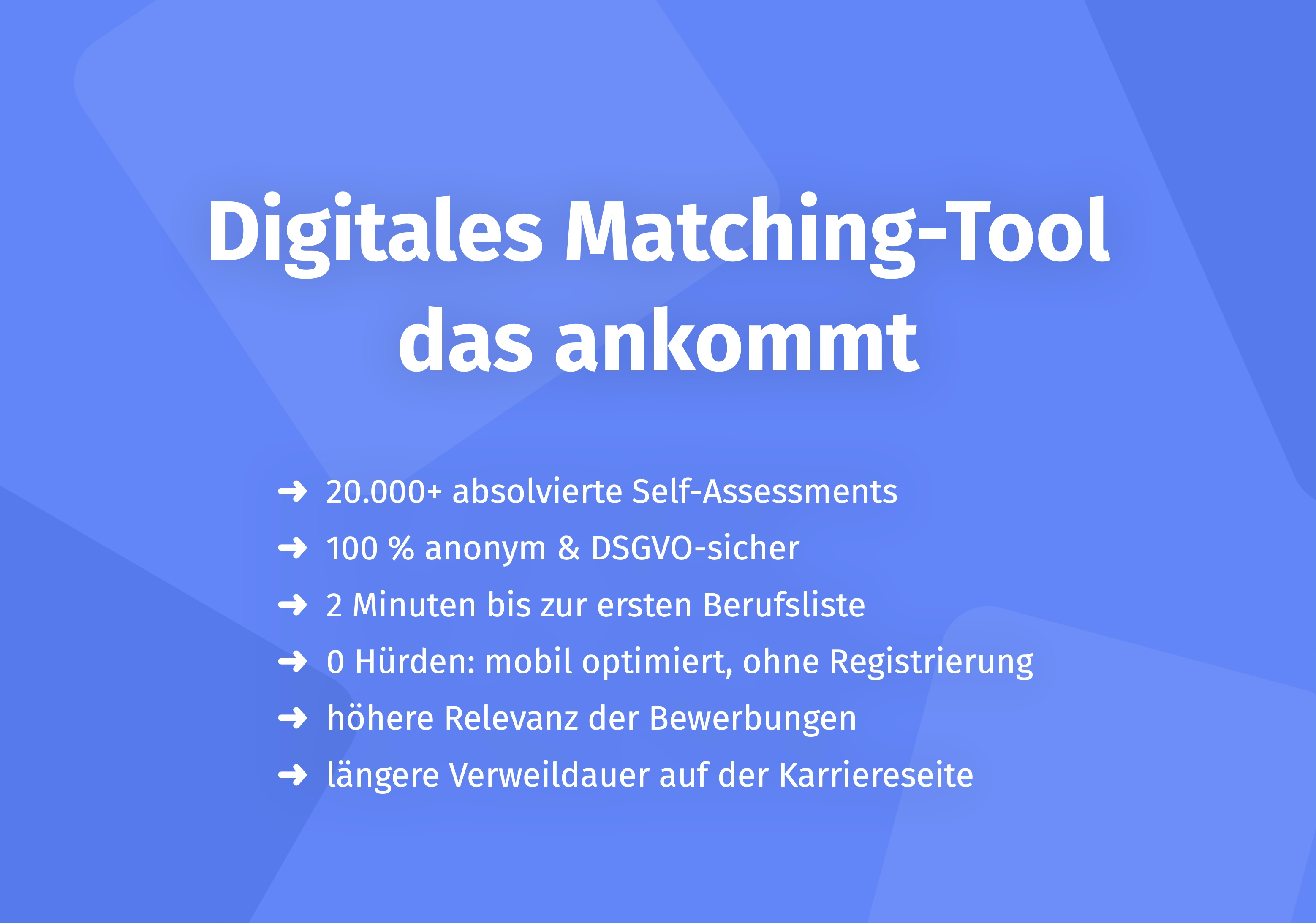
A digital platform like Aivy uses scientifically validated game-based assessments and questionnaires to Potentials and behavioural dispositions of individuals To measure for a positive Failure culture are relevant.
- Measurement of relevant competencies: The Aivy solution does not directly capture the Failure culture as a collective construct, but the underlying individual competencies such as Learning agility, Resilience and Openness to experience. Candidates who have this willingness to learn from mistakes and adapt form the basis for a dynamic fault management culture.
- Objectivity in Recruiting and Development: The objective data from the assessments gives you a basis for Recruiting and in the personnel development to make the right decisions. They help identify candidates who have a positive attitude towards mistakes and thus increase the likelihood of a cultural fit.
- Measuring potential as a predictive factor: By using these key potentials objectively Captured, do you create a measurable basis for how willing to learn and adaptive your future employees are. You are thus improving the Predictive accuracy for cultural fit and build up a team in the long term that open error culture carries.
Summary: The error culture as a growth strategy
The introduction of a Failure culture is a strategic project that goes far beyond mere buzzwords. It requires a conscious decision to use scientific knowledge and use the right tools to create an environment in which openness and learning replace fear.
A digital platform like Aivy can decisively support you on this journey by providing the necessary data and insights to understand the psychological foundations of a open error culture to understand, to find the right talent and to objectively accompany change. This is how the Failure culture in the company from an abstract goal to a measurable and implementable competitive advantage.
Frequently asked questions (FAQ)
- What is a positive error culture? A positive error culture is a corporate culture in which mistakes are not seen as personal failures but as an opportunity for joint learning and process improvement. It is about reducing the fear of failure and promoting transparency.
- Why is an open error culture important? It promotes innovation because employees dare to try out new ideas. It accelerates learning processes and contributes to higher employee satisfaction and retention because it creates psychological security.
- Who is responsible for the error culture in the company? The responsibility lies with everyone, but management has a decisive role model function. They must set an example and actively promote the concept.
- How can I measure error culture? In addition to employee surveys, you can draw on objective, scientifically based tools. These measure the underlying competencies, such as willingness to learn, problem solving or resilience, which are essential for a healthy error culture.
- What is the difference between error culture and error management? The error culture describes an organization's general attitude towards mistakes. Error management comprises the specific processes, tools and practices (e.g. post-mortem meetings) to analyze errors and learn from them. Both concepts complement each other.
- How do I introduce an error culture? Start with the management level, which must serve as a role model. Establish clear communication rules and specific rituals to talk about mistakes. Use data-based tools to measure progress and create transparency.
- Are there any known examples of companies with a good error culture? Companies such as Google or Pixar are often cited as positive examples. They have established open learning cultures in which testing ideas and failing is considered a normal part of the innovation process.
Sources
- Edmondson, A. (1999). Psychological safety and learning behavior in work teams. Administrative Science Quarterly, 44(2) 350-383 https://doi.org/10.2307/2666999
- Mogård, A., Sørensen, A.J., Luthra, S., Brinchmann, B.S., & Storli, S.L. (2022). The relationship between psychological safety and learning behavior: A study of interprofessional teams in health care. BMC Health Services Research, 22(1), 1—12 https://doi.org/10.3390/ijerph20010406
- Patil, P. (2023). Psychological Safety in the Workplace: Investigating its Impact on Team Learning, Team Efficacy, and Team Performance. The Open Psychology Journal, 16, e187435012307090. http://dx.doi.org/10.2174/18743501-v16-230727-2023-36
- Porkodi, S. (2024). The effectiveness of agile leadership in practice: A comprehensive meta-analytic review of the impact of agile leadership on organizational outcomes. Journal of Entrepreneurship, Management and Innovation, 20(2), 117-138. https://doi.org/10.7341/20242026
- Santana, J.S., Cardozo, E.S., & Garcia, L.A. (2025). Psychological Safety in Software Workplaces: A Systematic Literature Review. Journal of Systems and Software, 210, 111969. https://doi.org/10.1016/j.jss.2025.111969

Make a better pre-selection — even before the first interview
In just a few minutes, Aivy shows you which candidates really fit the role. Beyond resumes based on strengths.