You want to explore your strengths as a talent?

This way

Login

Occupational Health: Guide for HR & Companies

Home
-
Lexicon
-
Occupational Health: Guide for HR & Companies

Health at work: Why it is more than just a duty

In the modern world of work, Health at work It is no longer a side issue, but a central factor for corporate success. It's not just about meeting legal requirements, but also actively strengthening the performance, motivation and retention of your employees. From physical ergonomics to psychological resilience — the requirements for companies are complex and dynamic.

This comprehensive guide highlights the most important aspects of workplace health, shows where classic approaches are reaching their limits and how a modern, data-based approach can really move your company forward.

What is behind “health at work”?

The term covers all measures that companies take to protect, maintain and promote the health and well-being of their employees. It is divided into various areas:

  • occupational safety: The legally required part, which is intended to prevent accidents and work-related health risks. This includes ergonomic workplaces, safe machines and the provision of protective clothing.
  • Occupational Health Management (BGM): A systematic strategy for designing and managing health-promoting structures and processes. The aim is to sustainably secure and strengthen the health of the workforce.
  • Workplace Health Promotion (BGF): Specific offers and programs that go beyond legal occupational safety, such as sports courses, nutritional advice or stress management training.

Even the mental health at work is becoming increasingly important and is an integral part of the legally required risk assessment of psychological stress.

The gap between duty and impact: Where current approaches fail

Many companies see the funding of workplace health primarily as a legal obligation. They implement measures that look good on paper but often do not address the real causes of absenteeism and fluctuation. The focus is often on reactive measures — such as reporting illness — rather than on preventive, data-based interventions.

Typical problems of traditional approaches:

  • One-size-fits-all solutions: Programs such as the fruit basket or the yoga class are nice, but often only reach a small part of the workforce. They ignore the individual needs and stress factors of employees.
  • Missing database: Measures are implemented without a well-founded analysis of the specific burdens in the company. We know that psychological stress exists, but not which specific stressors prevail in which teams or in which job roles.
  • Lack of sustainability: One-off workshops or activities often fizzle out quickly. There is a lack of a long-term strategy that will sustainably change corporate culture.
  • Lack of fit between people and organization: A key, often overlooked factor for well-being is a lack of Cultural Fit. If a company's working methods, values or culture do not match the personal values and working methods of employees, this can lead to constant internal friction, frustration and ultimately psychological stress.

Without accurate data, companies are groping in the dark. Measures are chosen blindly, the ROI remains unclear and the actual problems remain unresolved. This is where scientifically based methods come into play, which enable precise diagnosis.

Mental health at work: identify risks, derive measures

Die mental health at work is a central pillar of performance and well-being. The World Health Organization (WHO) underlines the importance of mental safety and a supportive work environment. The most common risk factors include:

  • Work overload and time pressure
  • Little room for manoeuvre
  • Lack of social support
  • Unclear roles or conflicting goals
  • Lack of cultural fit
  • Bad leadership

The risk assessment of psychological stress is required by law for companies in Germany and provides a framework for systematically identifying such risks. But how do you move from analysis to effective intervention?

Precise diagnostics as the key to effectiveness

Um Health promotion in the workplace To be truly effective, you need a clear, evidence-based strategy. This is where scientifically based diagnostic methods can make a decisive difference. They help to find a good fit between applicants and the corporate culture, which can reduce absenteeism in the long term and increase employee loyalty.

A digital platform that uses scientifically based procedures such as game-based assessments and validated questionnaires makes it possible to measure the fit of candidates to work culture. A good Cultural Fit is a key predictor of well-being and long-term commitment, which in turn reduces turnover and associated costs. If the candidates' fundamental values and behavioral preferences match the corporate culture, this reduces the risk of conflicts and stress factors that can have a negative impact on health.

How a data-based solution supports companies

A modern, technology-based solution such as that from Aivy directly addresses the problems mentioned above. Instead of relying on vague assumptions, the strategy is based on hard data that enables a better fit between people and organizations.

Cultural fit and value matching: Even during the application phase, the platform can use psychometric tests to check whether the candidates' fundamental values and behavioral preferences match the corporate culture. This reduces the risk of subsequent conflicts and stressors that have a negative impact on health.

With the collected data, companies can derive effective interventions. For example, they may find that time pressure is high for a specific team, while a lack of social support is a problem in another department. On the basis of this, explicit prevention measures can be carried out.

Case study: MCI Deutschland GmbH

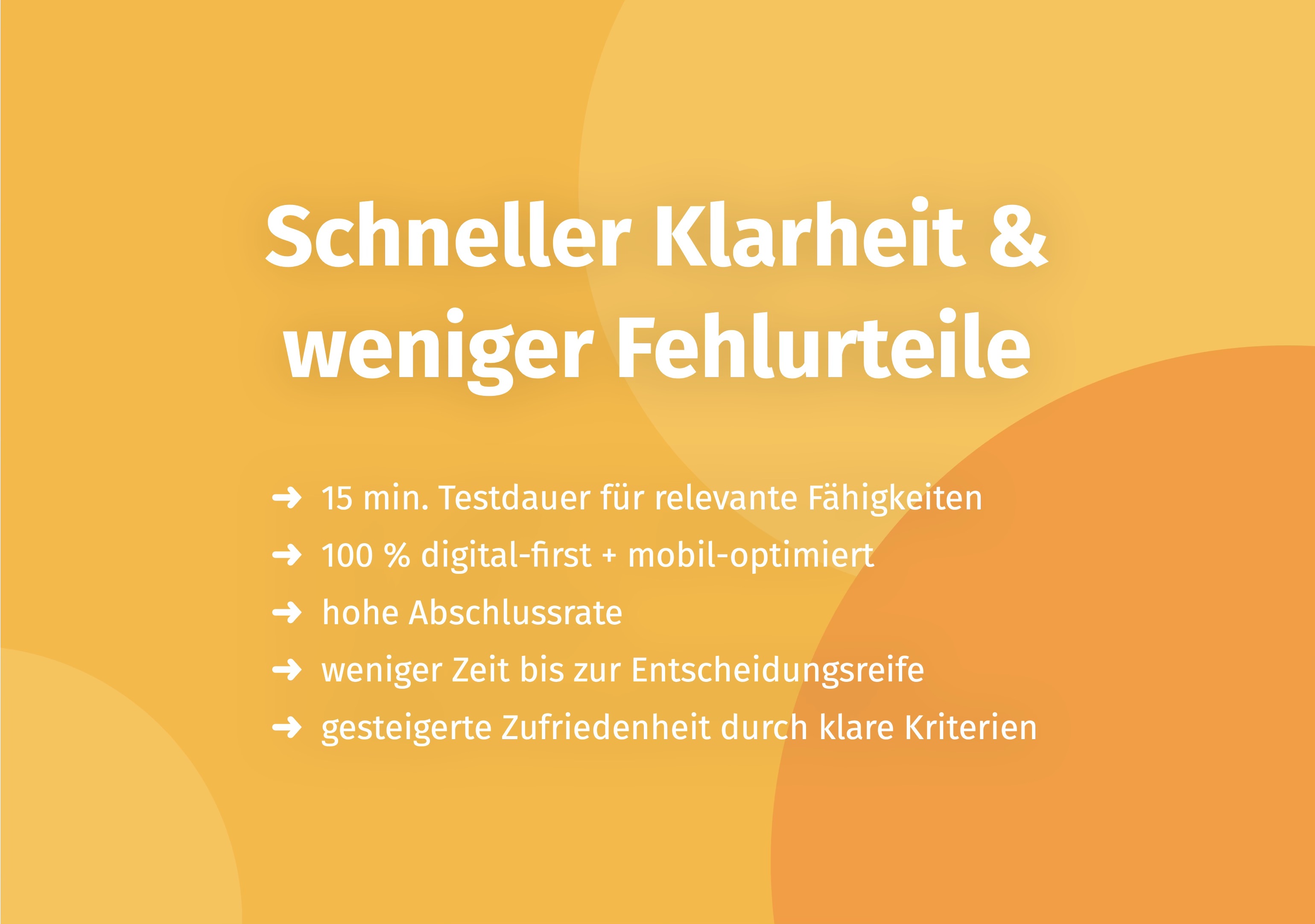
Applicants' key strengths and preferences often remain undetected because they are not aware of themselves. It is precisely these “blind spots” that MCI Deutschland GmbH makes visible with the help of Aivy's playful mini-assessments. In just about 15 minutes, an individual strength profile is created — without “right” or “wrong.”

This innovative approach enables MCI to match candidates' unconscious strengths and preferences with the company's values and culture. The results help to form teams that Working together in a diverse and harmonious waybecause they are built on a common basis of values. In this way, potential is discovered that remains invisible in a conventional curriculum vitae. This not only enables a better fit with the team and corporate culture, but also lays the foundation for a healthier working environment and sustainable employee retention.

The ROI of health promotion: Why investments pay off

The investment in Health promotion in the workplace is not a cost factor, but an investment in the future of the company. A healthy workforce is more productive, more motivated and more loyal.

  • Reducing absenteeism: Healthy employees are less likely to be missing. Preventive measures, such as a good fit in recruiting, reduce absenteeism due to illness and associated costs.
  • Increasing productivity: People who feel comfortable and are less stressed work more efficiently and creatively.
  • Reduction of fluctuation: Companies that care about the health of their employees have higher employee loyalty. A good fit (cultural fit) from the outset makes a significant contribution to this. This saves recruiting and training costs.

Improving employer brand: A strong commitment to employee health makes a company attractive for skilled workers and strengthens its positive public image.

Conclusion: From duty to strategic opportunity

Health at work is an essential responsibility of companies. The transition from simply meeting legal obligations to a proactive, evidence-based strategy is crucial for sustainable corporate success. Modern, digital solutions such as those from Aivy offer a convincing answer: They provide the necessary data-based insights to improve the fit between applicants and corporate culture. This not only protects the health of the workforce, but also actively promotes it — a real added value for everyone involved.

Frequently asked questions (FAQ)

  1. What are the minimum legal requirements for companies with regard to occupational health? In Germany, companies must guarantee the physical and mental health of their employees in accordance with the Occupational Health and Safety Act. This includes regular risk assessments, the provision of safe work equipment and the implementation of necessary protective measures. The psychological risk assessment, which has been mandatory for all companies since 2013, is particularly important.
  2. What is the difference between BGM and BGF? Occupational health management (BGM) is the overarching strategy that comprises all processes and structures in the company that promote the health of the workforce. Occupational health promotion (BGF) are the specific, often behavioural measures (e.g. sports courses, workshops) that are offered as part of the BGM.
  3. How can I identify psychological stress among my employees at an early stage? Early warning signs can be: increased absenteeism, performance fluctuations, withdrawal of colleagues, increased irritability or increased errors. It is important to create a trusting environment in which employees can talk openly about problems. Anonymous, scientifically based screenings can help to objectively identify stress factors in the team without individuals having to expose themselves.
  4. Which measures are particularly effective? Effective measures are those that are based on a well-founded diagnosis of the specific burdens in the company. These include relationship-oriented measures such as the optimization of work processes or management style, as well as behavior-oriented offers such as stress management training or resilience coaching. A combination of both is often the most effective. A good Cultural Fit is also an important preventive measure, as it reduces stress in the long term.
  5. Can the ROI of health measures be measured? Yes, the return on investment (ROI) can be determined by analyzing various key figures. This includes reducing absenteeism, reducing turnover rates, increasing productivity, and improving engagement. Modern digital tools help to record this data transparently and to make the success of the measures visible.
  6. What is cultural fit and how does it fit in with employee health? Cultural fit describes the harmony of an employee's personal values, attitudes and working methods with the culture and values of a company. A high fit can strengthen the sense of belonging and lead to greater satisfaction, while a low fit can lead to constant adjustment and psychological stress. The precise measurement of cultural fit in the recruiting process is therefore an important preventive measure to promote long-term employee health.

Sources:

Home
-
lexicon
-
Occupational Health: Guide for HR & Companies

Health at work: Why it is more than just a duty

In the modern world of work, Health at work It is no longer a side issue, but a central factor for corporate success. It's not just about meeting legal requirements, but also actively strengthening the performance, motivation and retention of your employees. From physical ergonomics to psychological resilience — the requirements for companies are complex and dynamic.

This comprehensive guide highlights the most important aspects of workplace health, shows where classic approaches are reaching their limits and how a modern, data-based approach can really move your company forward.

What is behind “health at work”?

The term covers all measures that companies take to protect, maintain and promote the health and well-being of their employees. It is divided into various areas:

  • occupational safety: The legally required part, which is intended to prevent accidents and work-related health risks. This includes ergonomic workplaces, safe machines and the provision of protective clothing.
  • Occupational Health Management (BGM): A systematic strategy for designing and managing health-promoting structures and processes. The aim is to sustainably secure and strengthen the health of the workforce.
  • Workplace Health Promotion (BGF): Specific offers and programs that go beyond legal occupational safety, such as sports courses, nutritional advice or stress management training.

Even the mental health at work is becoming increasingly important and is an integral part of the legally required risk assessment of psychological stress.

The gap between duty and impact: Where current approaches fail

Many companies see the funding of workplace health primarily as a legal obligation. They implement measures that look good on paper but often do not address the real causes of absenteeism and fluctuation. The focus is often on reactive measures — such as reporting illness — rather than on preventive, data-based interventions.

Typical problems of traditional approaches:

  • One-size-fits-all solutions: Programs such as the fruit basket or the yoga class are nice, but often only reach a small part of the workforce. They ignore the individual needs and stress factors of employees.
  • Missing database: Measures are implemented without a well-founded analysis of the specific burdens in the company. We know that psychological stress exists, but not which specific stressors prevail in which teams or in which job roles.
  • Lack of sustainability: One-off workshops or activities often fizzle out quickly. There is a lack of a long-term strategy that will sustainably change corporate culture.
  • Lack of fit between people and organization: A key, often overlooked factor for well-being is a lack of Cultural Fit. If a company's working methods, values or culture do not match the personal values and working methods of employees, this can lead to constant internal friction, frustration and ultimately psychological stress.

Without accurate data, companies are groping in the dark. Measures are chosen blindly, the ROI remains unclear and the actual problems remain unresolved. This is where scientifically based methods come into play, which enable precise diagnosis.

Mental health at work: identify risks, derive measures

Die mental health at work is a central pillar of performance and well-being. The World Health Organization (WHO) underlines the importance of mental safety and a supportive work environment. The most common risk factors include:

  • Work overload and time pressure
  • Little room for manoeuvre
  • Lack of social support
  • Unclear roles or conflicting goals
  • Lack of cultural fit
  • Bad leadership

The risk assessment of psychological stress is required by law for companies in Germany and provides a framework for systematically identifying such risks. But how do you move from analysis to effective intervention?

Precise diagnostics as the key to effectiveness

Um Health promotion in the workplace To be truly effective, you need a clear, evidence-based strategy. This is where scientifically based diagnostic methods can make a decisive difference. They help to find a good fit between applicants and the corporate culture, which can reduce absenteeism in the long term and increase employee loyalty.

A digital platform that uses scientifically based procedures such as game-based assessments and validated questionnaires makes it possible to measure the fit of candidates to work culture. A good Cultural Fit is a key predictor of well-being and long-term commitment, which in turn reduces turnover and associated costs. If the candidates' fundamental values and behavioral preferences match the corporate culture, this reduces the risk of conflicts and stress factors that can have a negative impact on health.

How a data-based solution supports companies

A modern, technology-based solution such as that from Aivy directly addresses the problems mentioned above. Instead of relying on vague assumptions, the strategy is based on hard data that enables a better fit between people and organizations.

Cultural fit and value matching: Even during the application phase, the platform can use psychometric tests to check whether the candidates' fundamental values and behavioral preferences match the corporate culture. This reduces the risk of subsequent conflicts and stressors that have a negative impact on health.

With the collected data, companies can derive effective interventions. For example, they may find that time pressure is high for a specific team, while a lack of social support is a problem in another department. On the basis of this, explicit prevention measures can be carried out.

Case study: MCI Deutschland GmbH

Applicants' key strengths and preferences often remain undetected because they are not aware of themselves. It is precisely these “blind spots” that MCI Deutschland GmbH makes visible with the help of Aivy's playful mini-assessments. In just about 15 minutes, an individual strength profile is created — without “right” or “wrong.”

This innovative approach enables MCI to match candidates' unconscious strengths and preferences with the company's values and culture. The results help to form teams that Working together in a diverse and harmonious waybecause they are built on a common basis of values. In this way, potential is discovered that remains invisible in a conventional curriculum vitae. This not only enables a better fit with the team and corporate culture, but also lays the foundation for a healthier working environment and sustainable employee retention.

The ROI of health promotion: Why investments pay off

The investment in Health promotion in the workplace is not a cost factor, but an investment in the future of the company. A healthy workforce is more productive, more motivated and more loyal.

  • Reducing absenteeism: Healthy employees are less likely to be missing. Preventive measures, such as a good fit in recruiting, reduce absenteeism due to illness and associated costs.
  • Increasing productivity: People who feel comfortable and are less stressed work more efficiently and creatively.
  • Reduction of fluctuation: Companies that care about the health of their employees have higher employee loyalty. A good fit (cultural fit) from the outset makes a significant contribution to this. This saves recruiting and training costs.

Improving employer brand: A strong commitment to employee health makes a company attractive for skilled workers and strengthens its positive public image.

Conclusion: From duty to strategic opportunity

Health at work is an essential responsibility of companies. The transition from simply meeting legal obligations to a proactive, evidence-based strategy is crucial for sustainable corporate success. Modern, digital solutions such as those from Aivy offer a convincing answer: They provide the necessary data-based insights to improve the fit between applicants and corporate culture. This not only protects the health of the workforce, but also actively promotes it — a real added value for everyone involved.

Frequently asked questions (FAQ)

  1. What are the minimum legal requirements for companies with regard to occupational health? In Germany, companies must guarantee the physical and mental health of their employees in accordance with the Occupational Health and Safety Act. This includes regular risk assessments, the provision of safe work equipment and the implementation of necessary protective measures. The psychological risk assessment, which has been mandatory for all companies since 2013, is particularly important.
  2. What is the difference between BGM and BGF? Occupational health management (BGM) is the overarching strategy that comprises all processes and structures in the company that promote the health of the workforce. Occupational health promotion (BGF) are the specific, often behavioural measures (e.g. sports courses, workshops) that are offered as part of the BGM.
  3. How can I identify psychological stress among my employees at an early stage? Early warning signs can be: increased absenteeism, performance fluctuations, withdrawal of colleagues, increased irritability or increased errors. It is important to create a trusting environment in which employees can talk openly about problems. Anonymous, scientifically based screenings can help to objectively identify stress factors in the team without individuals having to expose themselves.
  4. Which measures are particularly effective? Effective measures are those that are based on a well-founded diagnosis of the specific burdens in the company. These include relationship-oriented measures such as the optimization of work processes or management style, as well as behavior-oriented offers such as stress management training or resilience coaching. A combination of both is often the most effective. A good Cultural Fit is also an important preventive measure, as it reduces stress in the long term.
  5. Can the ROI of health measures be measured? Yes, the return on investment (ROI) can be determined by analyzing various key figures. This includes reducing absenteeism, reducing turnover rates, increasing productivity, and improving engagement. Modern digital tools help to record this data transparently and to make the success of the measures visible.
  6. What is cultural fit and how does it fit in with employee health? Cultural fit describes the harmony of an employee's personal values, attitudes and working methods with the culture and values of a company. A high fit can strengthen the sense of belonging and lead to greater satisfaction, while a low fit can lead to constant adjustment and psychological stress. The precise measurement of cultural fit in the recruiting process is therefore an important preventive measure to promote long-term employee health.

Sources:

Heading 1

Heading 2

Heading 3

Heading 4

Heading 5
Heading 6

Lorem ipsum dolor sit amet, consectetur adipiscing elit, sed do eiusmod tempor incididunt ut laboratories et dolore magna aliqua. Ut Enim ad Minim Veniam, Quis Nostrud Exercitation Ullamco Laboris Nisi ut Aliquip ex ea Commodo Consequat. Duis aute irure dolor in reprehenderite in voluptate velit eat cillum dolore eu fugiate nulla pariature.

Block quote

Ordered list

  1. Item 1
  2. Item 2
  3. Item 3

Unordered list

  • Item A
  • Item B
  • Item C

Text link

Bold text

Emphasis

Superscript

Subscript

Heading 1

Heading 2

Heading 3

Heading 4

Heading 5
Heading 6

Lorem ipsum dolor sit amet, consectetur adipiscing elit, sed do eiusmod tempor incididunt ut laboratories et dolore magna aliqua. Ut Enim ad Minim Veniam, Quis Nostrud Exercitation Ullamco Laboris Nisi ut Aliquip ex ea Commodo Consequat. Duis aute irure dolor in reprehenderite in voluptate velit eat cillum dolore eu fugiate nulla pariature.

Block quote

Ordered list

  1. Item 1
  2. Item 2
  3. Item 3

Unordered list

  • Item A
  • Item B
  • Item C

Text link

Bold text

Emphasis

Superscript

Subscript

Florian Dyballa

CEO, Co-Founder

About Florian

  • Founder & CEO of Aivy — develops innovative ways of personnel diagnostics and is one of the top 10 HR tech founders in Germany (business punk)
  • More than 500,000 digital aptitude tests successfully used by more than 100 companies such as Lufthansa, Würth and Hermes
  • Three times honored with the HR Innovation Award and regularly featured in leading business media (WirtschaftsWoche, Handelsblatt and FAZ)
  • As a business psychologist and digital expert, combines well-founded tests with AI for fair opportunities in personnel selection
  • Shares expertise as a sought-after thought leader in the HR tech industry — in podcasts, media, and at key industry events
  • Actively shapes the future of the working world — by combining science and technology for better and fairer personnel decisions
success stories

You can expect these results

Discover what successes other companies are achieving by using Aivy. Be inspired and do the same as they do.

Many innovative employers already rely on Aivy

Say that #HeRoes

“Through the very high response rate Persuade and retain We our trainees early in the application process. ”

Tamara Molitor
Training manager at Würth
Tamara Molitor

“That Strengths profile reflects 1:1 our experience in a personal conversation. ”

Wolfgang Böhm
Training manager at DIEHL
Wolfgang Böhm Portrait

“Through objective criteria, we promote equal opportunities and Diversity in recruiting. ”

Marie-Jo Goldmann
Head of HR at Nucao
Marie Jo Goldmann Portrait

Aivy is the bestWhat I've come across so far in the German diagnostics start-up sector. ”

Carl-Christoph Fellinger
Strategic Talent Acquisition at Beiersdorf
Christoph Feillinger Portrait

“Selection process which Make fun. ”

Anna Miels
Learning & Development Manager at apoproject
Anna Miels Portrait

“Applicants find out for which position they have the suitable competencies bring along. ”

Jürgen Muthig
Head of Vocational Training at Fresenius
Jürgen Muthig Fresenius Portrait

“Get to know hidden potential and Develop applicants in a targeted manner. ”

Christian Schütz
HR manager at KU64
Christian Schuetz

Saves time and is a lot of fun doing daily work. ”

Matthias Kühne
Director People & Culture at MCI Germany
Matthias Kühne

Engaging candidate experience through communication on equal terms. ”

Theresa Schröder
Head of HR at Horn & Bauer
Theresa Schröder

“Very solid, scientifically based, innovative even from a candidate's point of view and All in all, simply well thought-out. ”

Dr. Kevin-Lim Jungbauer
Recruiting and HR Diagnostics Expert at Beiersdorf
Kevin Jungbauer
YOUR assistant FOR TALENT ASSESSMENT

Try it for free

Become a HeRo 🦸 and understand candidate fit - even before the first job interview...