
Companies are still struggling with the challenge of finding qualified specialists. In order to be able to fill vacancies adequately, they are therefore in competition for the best young talent, so-called high potentials.
Definition: potential analysis
The term potential analysis (from Latin potentia = strength) refers to the structured recording of ability potentials using aptitude diagnostic methods. It thus serves to predict the professional success of employees in current and future positions (see Schuler & Prochaska 1999).
High potentials are applicants who have a high potential to be successful in their current and future job. Identifying high potentials among applicants is the task of a scientific potential analysis.
Briefly explained in 75 seconds
High potentials: What can they actually do?
The term “potential” refers to the performance and development opportunities that are available to a person, but which have not yet been fully exploited. These are achieved with the help of aptitude diagnostic test methods (e.g. cognitive performance tests, personality tests). In particular, there are five categories of characteristics:
- Methodological expertise
Ability to identify correlations, identify opportunities for improvement and develop proposed solutions.
Examples: work planning, problem-solving ability
- Interpersonal skills
Ability to deal with colleagues and customers.
Examples: empathy, ability to work in a team
- Professional expertise
Ability to use learned knowledge in a solution-oriented manner.
Examples: foreign language skills, programming skills
- Personal competencies
Personal behavior in a professional context.
Examples: Reliability, self-confidence, ability to reflect
- Change skills
Willingness to learn over a lifetime.
Examples: adaptability, learning orientation
Where, when and why are potential analyses used?
There are a total of three primary areas of application for potential analysis:
Career guidance
What am I really good at and in which professional field can I develop my strengths in the best possible way?
After school at the latest, everyone has to ask themselves the question: What am I actually really good at and in which profession will I work later? But identifying one's own experiences, competencies, strengths and weaknesses is often not that easy — we have already noticed this when we asked ourselves the famous question about our own weaknesses and strengths in the application process.
A scientifically based potential analysis aims at balancing self-assessment and external assessments of one's own potential and thus supports individuals in making decisions with regard to their professional future.
Particularly in a school context, the procedure should playful, action-oriented and requirements-related be. It is particularly important that the analysis carried out does not push students in a specific direction, but helps them to recognize their own interests and stimulate their self-reflection in a playful way. This works particularly well with playfully designed psychometric test procedure in the form of small mini-games or “challenges”.
Staff selection
Which applicants have the potential to be successful in current positions and in the working world of tomorrow?
In addition to career guidance, potential analysis is often carried out as part of Staff selection used to find the best possible candidates for a vacant position and thus to be successful in an increasing battle for talent. In this case, the potential analysis usually involves specifying the requirements of the position as part of a empirical requirement analysis ahead.
Personnel development
In which areas can employees fully develop their strengths and where is there development potential?
In a dynamic working world, the process of career orientation does not end after leaving school; rather, professional (re) orientation develops into a dynamic and lifelong process. This means that potential analysis also plays an important role in personnel development. So she belongs on the most important instruments in the area of Employee retention and promotion. Because if a person's potential is known, individual funding tailored to that person is possible — and this is for long-term retention of high potentials essential.
Why is potential analysis becoming more important in the working world of the future?
In order to understand why potential analysis is becoming increasingly important in an increasingly dynamic and fast-paced working world, we should first look at the weaknesses of biography-focused processes (e.g. curriculum vitae). These procedures are therefore backwards and look into the past.
The problem: When the tasks and required competencies in a job change ever faster, past experience plays an ever smaller role (e.g. experience with outdated software).
- cv | View direction: past
What has a person done well so far? - Potential analysis | View direction: future
In which areas is a person highly likely to be successful in the future?
An example: If candidates are to be selected for a junior leadership program, looking at the past is rarely effective, because their management experience is usually limited to having served as class president at most. Looking to the future and asking whether young people have the potential to become good leaders is much more important. This question can be answered with a scientifically based potential analysis.
How do you recognize a good potential analysis?
A good potential analysis is recognized six key aspects. She is...
- Scientifically based and validated
Aivy's potential analysis consists of scientifically based test methods developed by psychometricians with many years of experience. All processes meet the scientific quality criteria in accordance with DIN 33430.
- Requirements-oriented and job-related
The test battery is compiled in a personalized manner on the basis of the specified professional goals and experience (career orientation) or the empirically determined requirement profile (personnel selection).
- Fair and non-discriminatory
Data-based and objective test execution and evaluation results in assessment errors caused by Unconcious Bias avoided. The procedures are continuously reviewed for possible discrimination against minorities.
- Continually evolves
Aivy understands aptitude diagnostics in terms of continuous improvement process. By self-learning algorithms The prediction of the fit between applicants and the company's requirements is becoming more and more accurate.
- Entertaining, accepted and transparent through comprehensive feedback
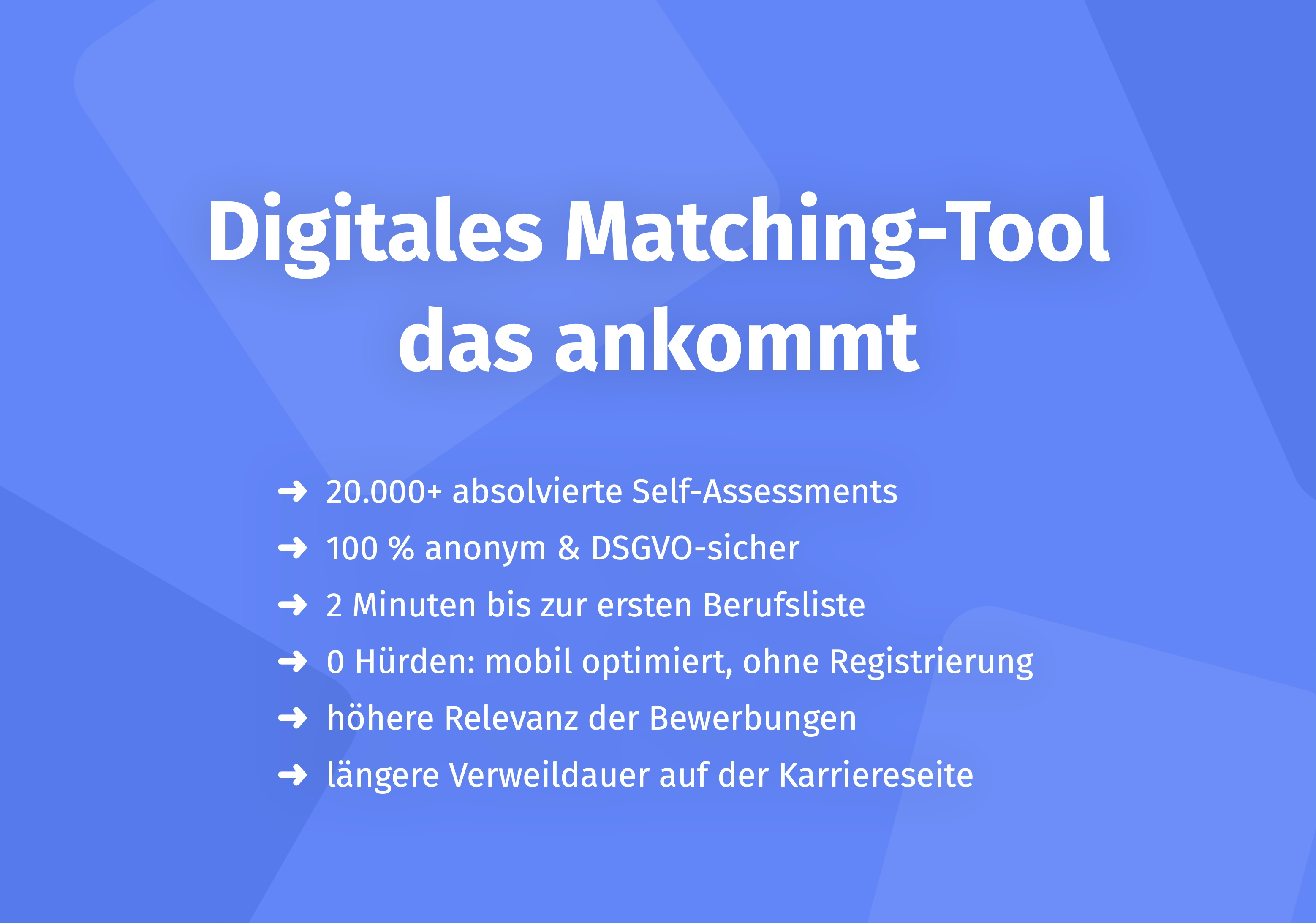
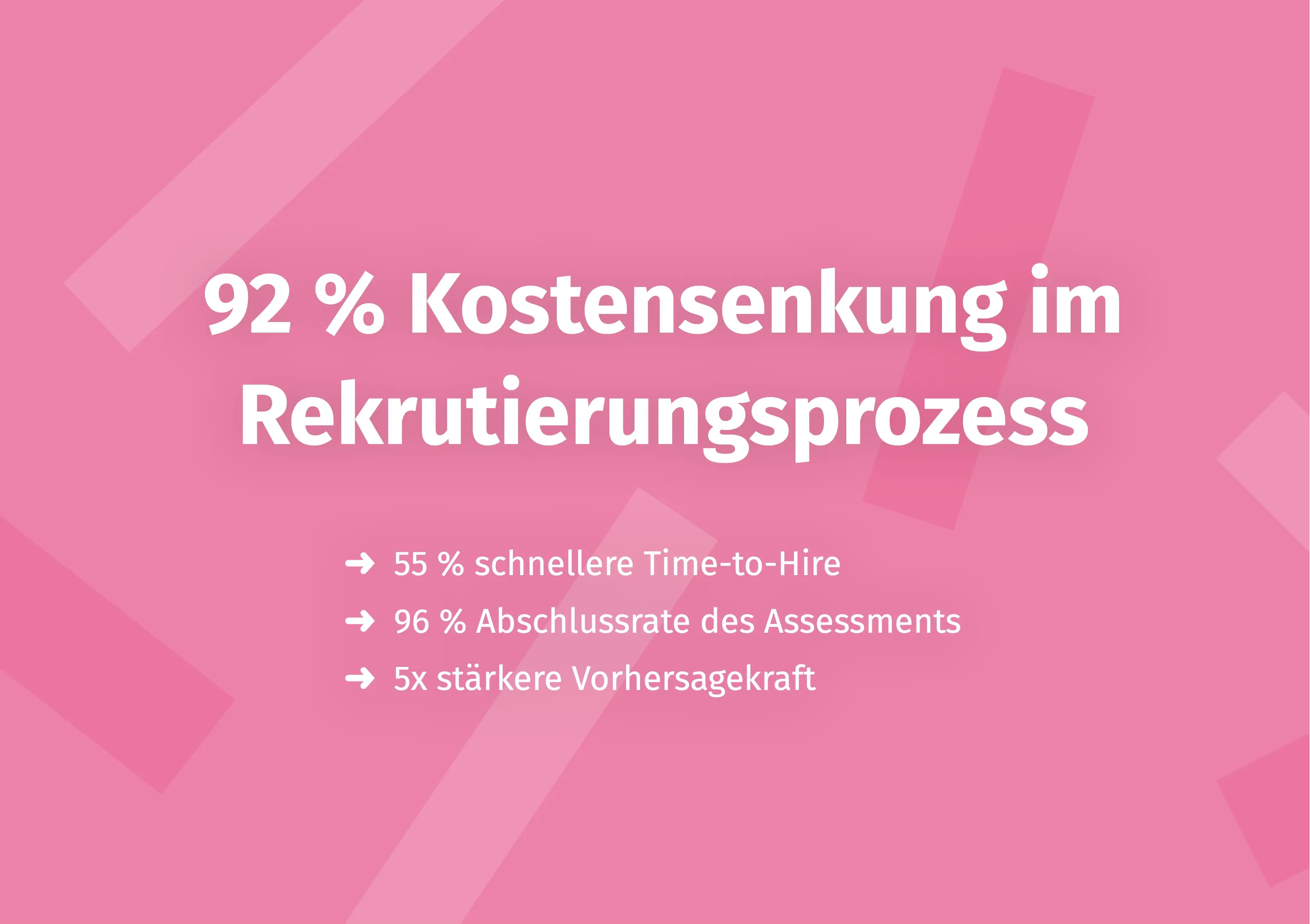
Aivy uses mobile-optimized Game-based assessments one that allow a playful, entertaining assessment of abilities, interests and personality traits (e.g. in the form of 2-3 minute small challenges). For example, Aivy impresses with 95% user acceptance and 80% time savings compared to previous selection processes. Instead of just receiving a rejection, applicants receive a detailed Feedback on their potential and alternative suggestions for job postings in the company that are better suited to their talents. - Holistic support in the process of finding, applying and developing
Aivy is versatile and can be used as Orientation solution (self-assessment) for candidates on the career side, when applying as early selection tool (pre-assessment) and as a tool for identifying Demand and funding requirements are used (continuous assessment). In doing so, Aivy not only identifies the potential of applicants, but also the requirements of companies. The focus is therefore on finding the best fit between the talents and potential of applicants on the one hand and the requirements of companies on the other (Job Matching).
Case studies from HR practice
Deutsche Lufthansa AG provides a current practical example of the effectiveness of scientifically based potential analyses. Through the use of scientifically validated psychometric testing methods from Aivy Could a A remarkable hit rate of 96% is achieved when pre-selecting trainees — and that even before the first personal interview.
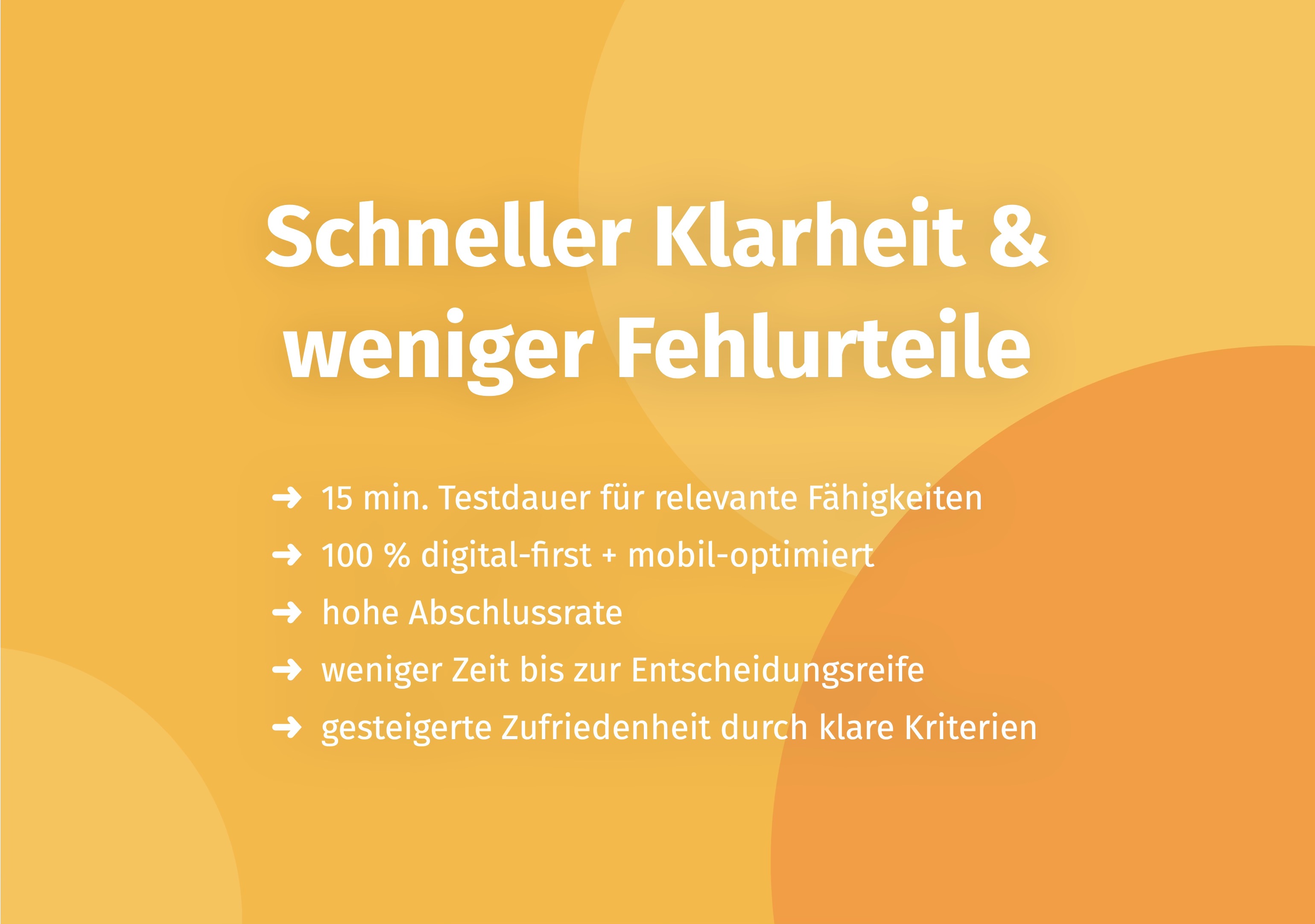
The implementation of Aptitude diagnostics within 15 minutes Online assessments The existing application process led to:
- An overall success rate of 96% for candidate suitability
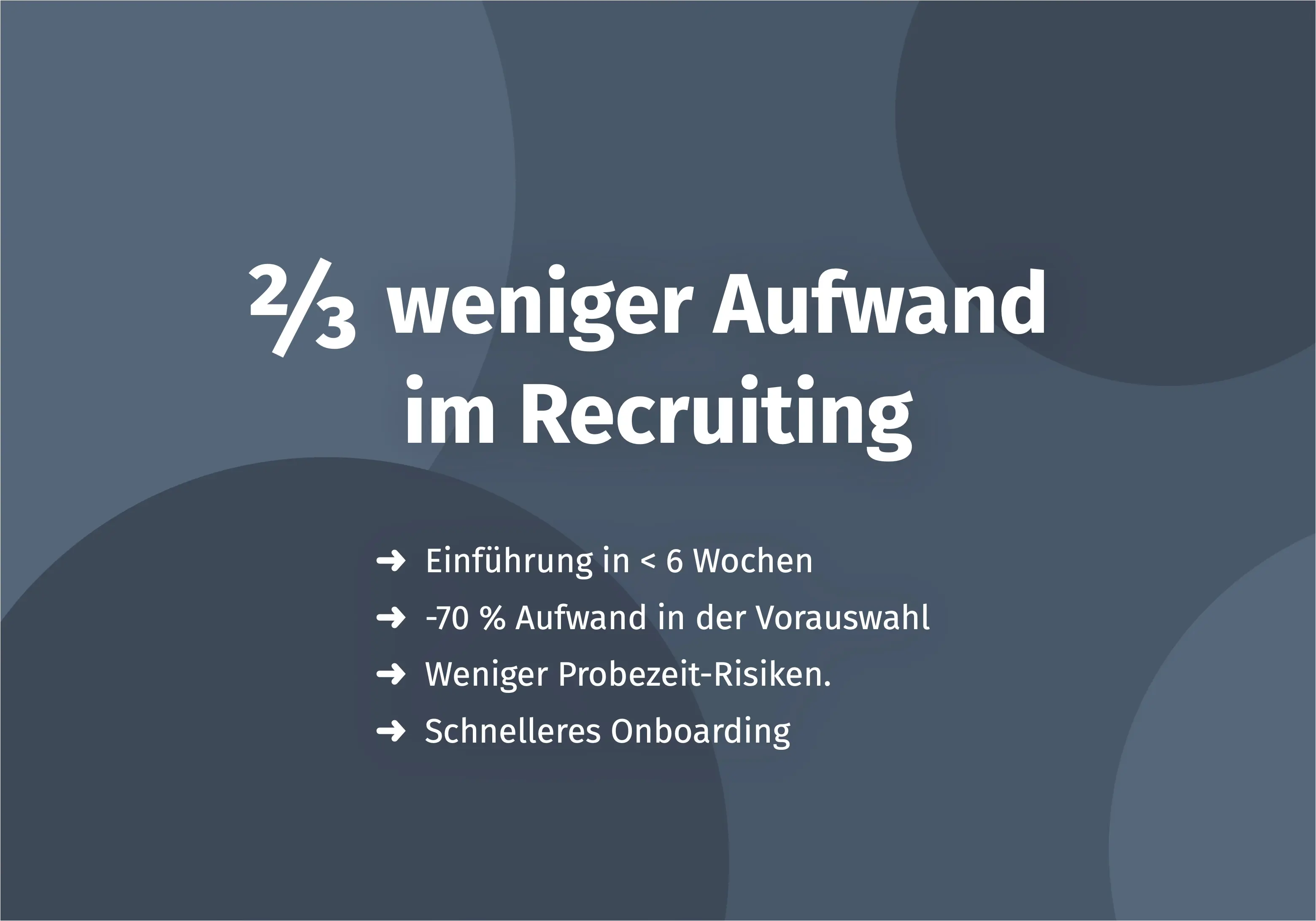
- A time saving of over 100 minutes per application
- A high level of acceptance among applicants with 86% completion rate
The high predictive accuracy of the process was demonstrated by a sample of over 1,200 applicants.
Over 1,200 companies already rely on Aivy's potential analyses

... and use them to successfully avoid wrong decisions in personnel selection — even before the initial interview!
→ Get non-binding advice now!
Testimonials from HR managers
“We get a better look at the person and recognize their strengths. So we can select by fit.” confirms Susanne Berthold Neumann, responsible for innovative young talent programs at Deutsche Lufthansa AG.
The combination of scientific background and positive candidate experience makes modern potential analyses particularly valuable for companies. More about this here...
Quality standards for potential analyses
When carrying out aptitude diagnostic procedures, the Scientificity of the methods used as well as the Protection of personal data in focus:
- Processing on ISO 27001-certified servers in Germany (Frankfurt am Main)
- Pseudonymized data collection to ensure anonymity
- Regular review by independent auditors (GDPR and BDSG)
As scientific spin-off of Freie Universität Berlin Aivy developed aptitude diagnostic methods that are based on DIN 33430 and have been validated in over 1 million assessments at over 1,200 companies of various sizes and industries. The development is carried out in close cooperation with leading experts, including Harald Ackerschott, co-author of DIN 33430 and head of the ISO Recruitment Working Group.
Sources
- BMBF (2016): Discovering talents. Guidelines for carrying out potential analyses for career orientation. https://www.bmbf.de/pub/Talente_entdecken.pdf
- DIN German Institute for Standardization e.V. (2016). Requirements for procedures and their use in job-related aptitude assessments — DIN 33430. Berlin: Beuth.
- Görlich, Y., Schuler, H., Becker, K. & Diemand, A. (2007). Evaluation of two potential analysis methods for internal selection and classification. In H. Schuler (ed.), Assessment Center for Potential Analysis (pp. 203-232). Göttingen: Hogrefe.
- Schuler, H. & Prochaska, M. (1999). Identification of personal characteristics: Performance and potential assessment of employees. In K. Sonntag (ed.), Personnel Development in Organizations (pp. 181-210). Göttingen: Hogrefe.

Make a better pre-selection — even before the first interview
In just a few minutes, Aivy shows you which candidates really fit the role. Beyond resumes based on strengths.