You want to explore your strengths as a talent?

This way

Login

E-recruiting: How to optimize your recruiting — Aivy

Home
-
Lexicon
-
E-recruiting: How to optimize your recruiting — Aivy

E-recruiting: How to revolutionize digital recruitment

The world of work is changing rapidly. In the past, newspaper ads and classic job interviews were enough to find the right talent. Today, companies are challenged to assert themselves in the “War for Talents.” E-recruiting is no longer a trend, but a strategic necessity. It is no longer just about digitizing the application process, but about fundamentally rethinking it — faster, more efficiently and, above all, fairer. But how can this be achieved without losing objectivity and quality?

In this comprehensive guide, you will learn what e-recruiting really means, the challenges of digitization and how to make the right decisions with innovative, scientifically based solutions.

What is e-recruiting? A definition

E-recruiting, also known as electronic recruiting or online recruiting, describes the use of digital technologies to support and optimize the entire recruitment process. This includes all steps, from needs analysis to posting job advertisements and managing incoming applications to aptitude diagnostics and hiring suitable candidates.

The goal of e-recruiting is to speed up the process, increase reach, reduce costs and improve the candidate experience. Instead of paper applications and lengthy telephone calls, today there are:

  • Digital job advertisements: Distribution via job boards, social media and your own company website.
  • Applicant Management Systems (ATS): Administration and organization of all applicant data in one central location.
  • Online application forms: Simple, often mobile-optimized input masks.
  • Automated communication: Confirmation emails, status updates, and invitations to talks.
  • Digital selection process: Online tests, video interviews and potential analyses.

While the first points are standard for many companies, the real lever for future-oriented personnel selection lies in digital selection processes. This is where the challenge begins, but also the opportunity for objective and fair aptitude diagnostics.

The downsides of classic e-recruiting: When efficiency meets mistakes

Although many companies have taken the first step into e-recruiting, they are quickly reaching their limits. A process that is purely digital but unchanged in terms of content entails significant risks, which can lead to expensive recruitment and a damaged reputation as an employer. The biggest Pain Points are:

  • Inefficient processes and media breaks: Applications are often submitted digitally, but the next steps — from pre-selection to assessment — are still manual, time-consuming and prone to errors. Without seamless integration of HR tools, inefficient processes arise that not only frustrate recruiters but also scare off applicants.
  • Bad candidate experience: Long waiting times, impersonal mass emails and unclear processes mean that applicants drop out. In times of a shortage of skilled workers, this is fatal. A positive and transparent experience is crucial to retain talent and strengthen employer branding.
  • Misappointments due to inadequate aptitude diagnostics: Many e-recruiting software solutions (ATS) are excellent in administration, but weak in the qualitative evaluation of candidates. The pre-selection is often based on unreliable criteria, such as curriculum vitae or cover letter, which say little about the actual suitability for a role. The result is incorrect decisions which, according to studies (e.g. from DEKRA), cause enormous costs.

Lack of objectivity (bias in recruiting): Despite digital processes, human prejudices (unconscious bias) remain a major problem. Biases based on name, gender, age, or origin can unconsciously influence the decision for or against an applicant. To do this, you should take a closer look at the topic of bias in recruiting. A purely digital system cannot solve this — on the contrary, it can even automate existing prejudices if the algorithms are not based on scientific criteria.

The solution: combine e-recruiting with scientific aptitude diagnostics and technology

The path to successful e-recruiting is to integrate scientifically based selection processes into the digital process. Such a solution directly addresses the problems mentioned above and creates added value for companies and candidates alike.

An innovative platform for aptitude diagnostics uses modern technologies to revolutionize e-recruiting:

  • Efficiency through automation: Instead of just managing applications, the candidates' relevant competencies are objectively assessed at an early stage. This automates pre-selection and makes it possible to focus on the most promising talents.
  • Optimal candidate experience: Playful elements (gamification) and mobile-optimized assessments make the application process attractive and interactive. Applicants receive quick feedback and experience the company as innovative.
  • Objectivity and fairness as core principles: By basing the selection decision on valid, psychometric data instead of unreliable criteria, unconscious prejudices are minimized. The focus is on the actual potential, abilities and relevant personality traits that are decisive for the job. As a result, companies can build more diverse teams and prevent discrimination.
  • Precise aptitude diagnostics: Technology must focus on scientific foundations. For example, playful tasks are used that measure psychologically relevant behaviours. This is a scientifically validated method to uncover hidden potentials that are not visible in CVs. You can learn more about game-based assessments to understand exactly how they work.

This is how Aivy solves e-recruiting challenges

The digital platform Aivy offers a comprehensive solution that takes e-recruiting to a new level. The tool goes beyond mere digitization and integrates scientific aptitude diagnostics directly into the application process.

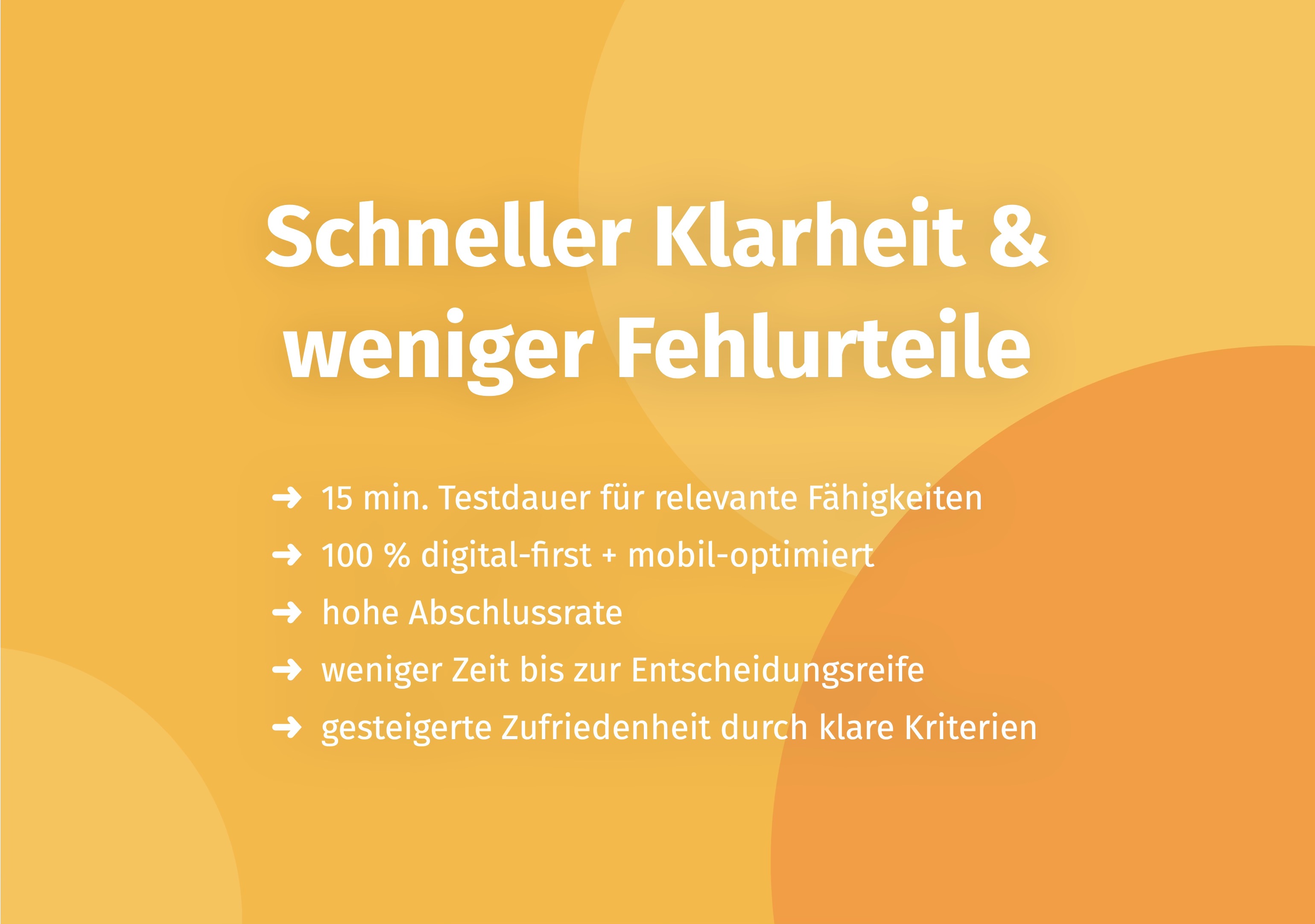
  • Data-driven decisions: Instead of relying on cover letters or CVs, Aivy makes it possible to quickly and objectively measure job-relevant competencies, such as analytical thinking, ability to work in a team or strong communication skills. This is done playfully and with short tasks that can be completed in just a few minutes.
  • Bias reduction through algorithms: The tool is designed in such a way that the algorithms only analyze the potential abilities and behavior of applicants, without regard to personal characteristics that could promote discrimination. This makes a fair comparison of all candidates possible, regardless of origin or gender.
  • Seamless integration: Aivy can be easily integrated into existing applicant management systems (e.g. Teamtailor, d.vinci or Softgarden) and ensures a smooth, digital workflow without media breaks.

Practical example: Callways — rapid transformation in recruiting

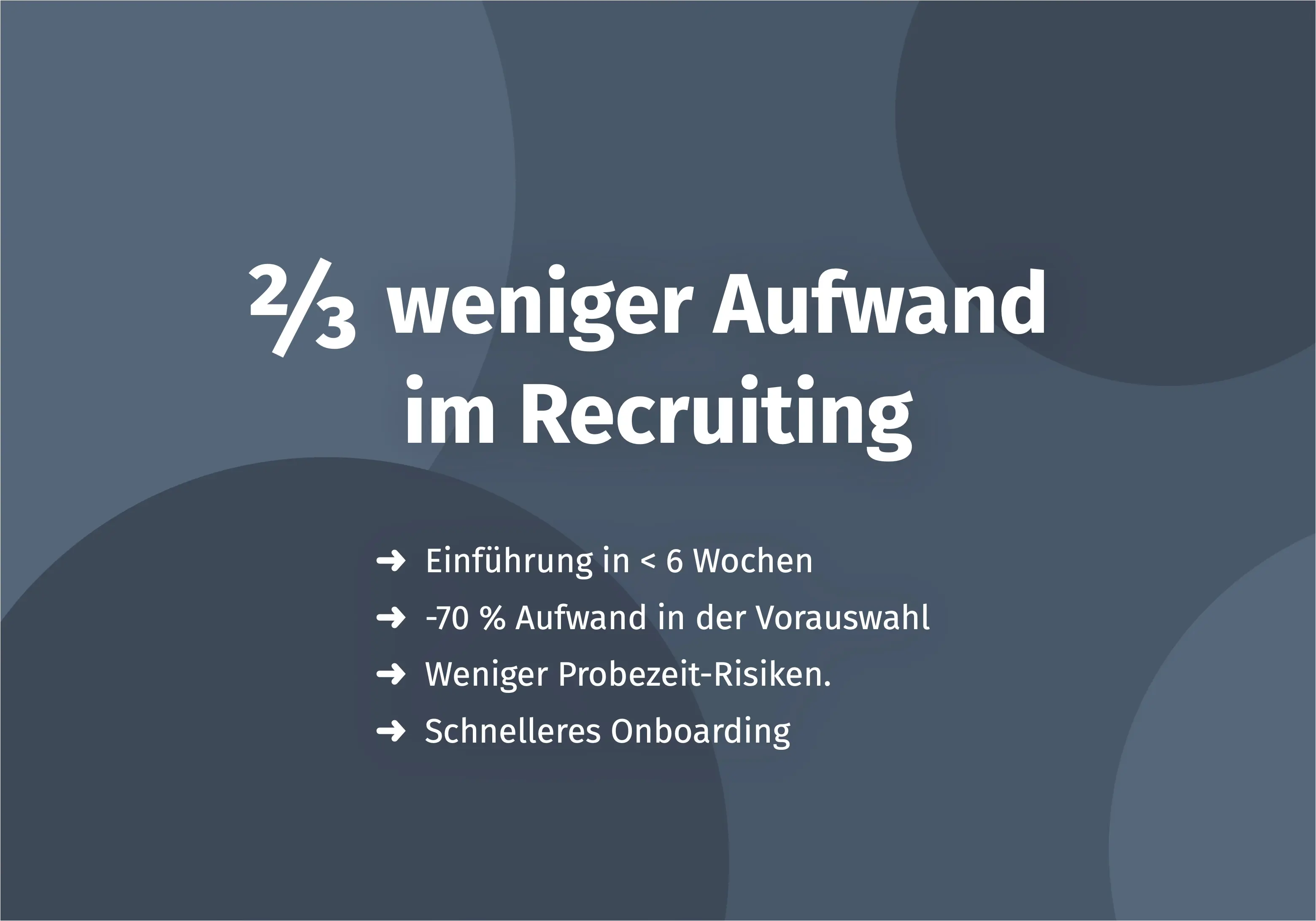
Achim Reinhardt, managing director of Callways, reports: “We have completely and successfully converted our recruitment process within 6 weeks.” This shows how a modern, digital platform can revolutionize recruitment, even under high time pressure.

By integrating Aivy into the recruiting process, Callways were able to move away from classic, time-consuming methods. Instead, they could rely on the Concentrate the best candidates, which not only saved time and resources, but also increased efficiency enormously.

The decision for scientifically based diagnostics, such as those offered by the tool, led to the following measurable successes:

  • Positive feedback from applicants: The process was perceived as modern, fair and appealing.
  • Significantly better call quality: Since the pre-selection was based on objective data, the discussions could be more in-depth and more well-founded decisions could be made.
  • Quick implementation: The complete changeover was completed in just 6 weeks, which underlines the flexibility and user-friendliness of the solution.

This example of callways shows that targeted digitization of recruiting not only leads to faster filling of positions, but also sustainably improves the quality of selection and the candidate experience.

Conclusion: The future of e-recruiting is objective and data-based

E-recruiting is much more than simply digitizing paperwork. It is an opportunity to redesign the entire recruiting process and set the course for sustainable talent acquisition. The mere increase in efficiency through digital forms is not enough to overcome the challenges of a shortage of skilled workers and bias.

The real revolution lies in combining technology and work psychology. A digital platform such as Aivy makes it possible to put aptitude diagnostics at the core of the e-recruiting process. It helps to make data-based, objective and fair decisions while creating a positive candidate experience. This ensures that the best talent is found — in a way that is both personally and technologically compelling.

Frequently asked questions (FAQ)

  1. What is the difference between e-recruiting and an ATS (Applicant Tracking System)? ATS is software that primarily digitizes the administration and organization of applications. E-recruiting is the overarching term for the entire digital recruiting process, which, in addition to administration, also includes digital communication, employer branding and even aptitude diagnostics.
  2. How can e-recruiting improve the candidate experience? Through quick, automated feedback, simple application channels (e.g. via mobile devices) and interactive elements such as game-based assessments. This reduces frustration and increases applicants' loyalty to the company.
  3. How does e-recruiting protect against discrimination? A scientifically based e-recruiting platform can help to minimize unconscious biases by basing decision-making on objective data and not on subjective impressions. For example, as a first step, applicants can be anonymized and compared based on their measured competencies.
  4. E-recruiting is only for big companies, isn't it? No, e-recruiting is relevant for companies of all sizes. Small and medium-sized enterprises (SMEs) benefit in particular from the increase in efficiency and cost savings that digital tools bring. Many solutions are now scalable even for smaller budgets.
  5. How do you measure the success of e-recruiting? The success of e-recruiting can be measured by key figures such as time-to-hire (time to fill a position), costs per hire, applicant dropout rate, quality of hired employees (performance, retention) and candidate experience (applicant satisfaction).

Sources:

  • Georgiou, K., et al. (2023). Gamification and Machine Learning: Validating a Game-Based Cognitive Assessment with a Machine Learning Based Scoring Algorithm Optimized for Validity and Fairness. Journal of Psychometric Assessment, 1(1), 19. https://pmc.ncbi.nlm.nih.gov/articles/PMC9891208/  
  • McKinsey & Company & Donors Association. (2018). How future skills are changing HR. https://www.stifterverband.org/medien/wie-future-skills-die-personalarbeit-veraendern 
  • Sackett, P.R., Zhang, C., Berry, C.M., & Lievens, F. (2023). Revisiting the Design of Selection Systems in Light of New Findings Regarding the Validity of Widely Used Predictors. Industrial and Organizational Psychology, 16(3), 283-300 https://doi.org/10.1017/iop.2023.24  
  • Schmidt, F.L., & Hunter, J.E. (1998). The Validity and Utility of Selection Methods in Personnel Psychology: Practical and Theoretical Implications of 85 Years of Research Findings. Psychological Bulletin, 124(2), 262—274. https://doi.org/10.1037/0033-2909.124.2.262  
  • Schmidt, F.L., Oh, I.S., & Shaffer, J.A. (2016). The Validity and Utility of Selection Methods in Personnel Psychology: Practical and Theoretical Implications of 100 Years of Research Findings (Working paper). The George Washington University.

Home
-
lexicon
-
E-recruiting: How to optimize your recruiting — Aivy

E-recruiting: How to revolutionize digital recruitment

The world of work is changing rapidly. In the past, newspaper ads and classic job interviews were enough to find the right talent. Today, companies are challenged to assert themselves in the “War for Talents.” E-recruiting is no longer a trend, but a strategic necessity. It is no longer just about digitizing the application process, but about fundamentally rethinking it — faster, more efficiently and, above all, fairer. But how can this be achieved without losing objectivity and quality?

In this comprehensive guide, you will learn what e-recruiting really means, the challenges of digitization and how to make the right decisions with innovative, scientifically based solutions.

What is e-recruiting? A definition

E-recruiting, also known as electronic recruiting or online recruiting, describes the use of digital technologies to support and optimize the entire recruitment process. This includes all steps, from needs analysis to posting job advertisements and managing incoming applications to aptitude diagnostics and hiring suitable candidates.

The goal of e-recruiting is to speed up the process, increase reach, reduce costs and improve the candidate experience. Instead of paper applications and lengthy telephone calls, today there are:

  • Digital job advertisements: Distribution via job boards, social media and your own company website.
  • Applicant Management Systems (ATS): Administration and organization of all applicant data in one central location.
  • Online application forms: Simple, often mobile-optimized input masks.
  • Automated communication: Confirmation emails, status updates, and invitations to talks.
  • Digital selection process: Online tests, video interviews and potential analyses.

While the first points are standard for many companies, the real lever for future-oriented personnel selection lies in digital selection processes. This is where the challenge begins, but also the opportunity for objective and fair aptitude diagnostics.

The downsides of classic e-recruiting: When efficiency meets mistakes

Although many companies have taken the first step into e-recruiting, they are quickly reaching their limits. A process that is purely digital but unchanged in terms of content entails significant risks, which can lead to expensive recruitment and a damaged reputation as an employer. The biggest Pain Points are:

  • Inefficient processes and media breaks: Applications are often submitted digitally, but the next steps — from pre-selection to assessment — are still manual, time-consuming and prone to errors. Without seamless integration of HR tools, inefficient processes arise that not only frustrate recruiters but also scare off applicants.
  • Bad candidate experience: Long waiting times, impersonal mass emails and unclear processes mean that applicants drop out. In times of a shortage of skilled workers, this is fatal. A positive and transparent experience is crucial to retain talent and strengthen employer branding.
  • Misappointments due to inadequate aptitude diagnostics: Many e-recruiting software solutions (ATS) are excellent in administration, but weak in the qualitative evaluation of candidates. The pre-selection is often based on unreliable criteria, such as curriculum vitae or cover letter, which say little about the actual suitability for a role. The result is incorrect decisions which, according to studies (e.g. from DEKRA), cause enormous costs.

Lack of objectivity (bias in recruiting): Despite digital processes, human prejudices (unconscious bias) remain a major problem. Biases based on name, gender, age, or origin can unconsciously influence the decision for or against an applicant. To do this, you should take a closer look at the topic of bias in recruiting. A purely digital system cannot solve this — on the contrary, it can even automate existing prejudices if the algorithms are not based on scientific criteria.

The solution: combine e-recruiting with scientific aptitude diagnostics and technology

The path to successful e-recruiting is to integrate scientifically based selection processes into the digital process. Such a solution directly addresses the problems mentioned above and creates added value for companies and candidates alike.

An innovative platform for aptitude diagnostics uses modern technologies to revolutionize e-recruiting:

  • Efficiency through automation: Instead of just managing applications, the candidates' relevant competencies are objectively assessed at an early stage. This automates pre-selection and makes it possible to focus on the most promising talents.
  • Optimal candidate experience: Playful elements (gamification) and mobile-optimized assessments make the application process attractive and interactive. Applicants receive quick feedback and experience the company as innovative.
  • Objectivity and fairness as core principles: By basing the selection decision on valid, psychometric data instead of unreliable criteria, unconscious prejudices are minimized. The focus is on the actual potential, abilities and relevant personality traits that are decisive for the job. As a result, companies can build more diverse teams and prevent discrimination.
  • Precise aptitude diagnostics: Technology must focus on scientific foundations. For example, playful tasks are used that measure psychologically relevant behaviours. This is a scientifically validated method to uncover hidden potentials that are not visible in CVs. You can learn more about game-based assessments to understand exactly how they work.

This is how Aivy solves e-recruiting challenges

The digital platform Aivy offers a comprehensive solution that takes e-recruiting to a new level. The tool goes beyond mere digitization and integrates scientific aptitude diagnostics directly into the application process.

  • Data-driven decisions: Instead of relying on cover letters or CVs, Aivy makes it possible to quickly and objectively measure job-relevant competencies, such as analytical thinking, ability to work in a team or strong communication skills. This is done playfully and with short tasks that can be completed in just a few minutes.
  • Bias reduction through algorithms: The tool is designed in such a way that the algorithms only analyze the potential abilities and behavior of applicants, without regard to personal characteristics that could promote discrimination. This makes a fair comparison of all candidates possible, regardless of origin or gender.
  • Seamless integration: Aivy can be easily integrated into existing applicant management systems (e.g. Teamtailor, d.vinci or Softgarden) and ensures a smooth, digital workflow without media breaks.

Practical example: Callways — rapid transformation in recruiting

Achim Reinhardt, managing director of Callways, reports: “We have completely and successfully converted our recruitment process within 6 weeks.” This shows how a modern, digital platform can revolutionize recruitment, even under high time pressure.

By integrating Aivy into the recruiting process, Callways were able to move away from classic, time-consuming methods. Instead, they could rely on the Concentrate the best candidates, which not only saved time and resources, but also increased efficiency enormously.

The decision for scientifically based diagnostics, such as those offered by the tool, led to the following measurable successes:

  • Positive feedback from applicants: The process was perceived as modern, fair and appealing.
  • Significantly better call quality: Since the pre-selection was based on objective data, the discussions could be more in-depth and more well-founded decisions could be made.
  • Quick implementation: The complete changeover was completed in just 6 weeks, which underlines the flexibility and user-friendliness of the solution.

This example of callways shows that targeted digitization of recruiting not only leads to faster filling of positions, but also sustainably improves the quality of selection and the candidate experience.

Conclusion: The future of e-recruiting is objective and data-based

E-recruiting is much more than simply digitizing paperwork. It is an opportunity to redesign the entire recruiting process and set the course for sustainable talent acquisition. The mere increase in efficiency through digital forms is not enough to overcome the challenges of a shortage of skilled workers and bias.

The real revolution lies in combining technology and work psychology. A digital platform such as Aivy makes it possible to put aptitude diagnostics at the core of the e-recruiting process. It helps to make data-based, objective and fair decisions while creating a positive candidate experience. This ensures that the best talent is found — in a way that is both personally and technologically compelling.

Frequently asked questions (FAQ)

  1. What is the difference between e-recruiting and an ATS (Applicant Tracking System)? ATS is software that primarily digitizes the administration and organization of applications. E-recruiting is the overarching term for the entire digital recruiting process, which, in addition to administration, also includes digital communication, employer branding and even aptitude diagnostics.
  2. How can e-recruiting improve the candidate experience? Through quick, automated feedback, simple application channels (e.g. via mobile devices) and interactive elements such as game-based assessments. This reduces frustration and increases applicants' loyalty to the company.
  3. How does e-recruiting protect against discrimination? A scientifically based e-recruiting platform can help to minimize unconscious biases by basing decision-making on objective data and not on subjective impressions. For example, as a first step, applicants can be anonymized and compared based on their measured competencies.
  4. E-recruiting is only for big companies, isn't it? No, e-recruiting is relevant for companies of all sizes. Small and medium-sized enterprises (SMEs) benefit in particular from the increase in efficiency and cost savings that digital tools bring. Many solutions are now scalable even for smaller budgets.
  5. How do you measure the success of e-recruiting? The success of e-recruiting can be measured by key figures such as time-to-hire (time to fill a position), costs per hire, applicant dropout rate, quality of hired employees (performance, retention) and candidate experience (applicant satisfaction).

Sources:

  • Georgiou, K., et al. (2023). Gamification and Machine Learning: Validating a Game-Based Cognitive Assessment with a Machine Learning Based Scoring Algorithm Optimized for Validity and Fairness. Journal of Psychometric Assessment, 1(1), 19. https://pmc.ncbi.nlm.nih.gov/articles/PMC9891208/  
  • McKinsey & Company & Donors Association. (2018). How future skills are changing HR. https://www.stifterverband.org/medien/wie-future-skills-die-personalarbeit-veraendern 
  • Sackett, P.R., Zhang, C., Berry, C.M., & Lievens, F. (2023). Revisiting the Design of Selection Systems in Light of New Findings Regarding the Validity of Widely Used Predictors. Industrial and Organizational Psychology, 16(3), 283-300 https://doi.org/10.1017/iop.2023.24  
  • Schmidt, F.L., & Hunter, J.E. (1998). The Validity and Utility of Selection Methods in Personnel Psychology: Practical and Theoretical Implications of 85 Years of Research Findings. Psychological Bulletin, 124(2), 262—274. https://doi.org/10.1037/0033-2909.124.2.262  
  • Schmidt, F.L., Oh, I.S., & Shaffer, J.A. (2016). The Validity and Utility of Selection Methods in Personnel Psychology: Practical and Theoretical Implications of 100 Years of Research Findings (Working paper). The George Washington University.

Heading 1

Heading 2

Heading 3

Heading 4

Heading 5
Heading 6

Lorem ipsum dolor sit amet, consectetur adipiscing elit, sed do eiusmod tempor incididunt ut laboratories et dolore magna aliqua. Ut Enim ad Minim Veniam, Quis Nostrud Exercitation Ullamco Laboris Nisi ut Aliquip ex ea Commodo Consequat. Duis aute irure dolor in reprehenderite in voluptate velit eat cillum dolore eu fugiate nulla pariature.

Block quote

Ordered list

  1. Item 1
  2. Item 2
  3. Item 3

Unordered list

  • Item A
  • Item B
  • Item C

Text link

Bold text

Emphasis

Superscript

Subscript

Heading 1

Heading 2

Heading 3

Heading 4

Heading 5
Heading 6

Lorem ipsum dolor sit amet, consectetur adipiscing elit, sed do eiusmod tempor incididunt ut laboratories et dolore magna aliqua. Ut Enim ad Minim Veniam, Quis Nostrud Exercitation Ullamco Laboris Nisi ut Aliquip ex ea Commodo Consequat. Duis aute irure dolor in reprehenderite in voluptate velit eat cillum dolore eu fugiate nulla pariature.

Block quote

Ordered list

  1. Item 1
  2. Item 2
  3. Item 3

Unordered list

  • Item A
  • Item B
  • Item C

Text link

Bold text

Emphasis

Superscript

Subscript

Florian Dyballa

CEO, Co-Founder

About Florian

  • Founder & CEO of Aivy — develops innovative ways of personnel diagnostics and is one of the top 10 HR tech founders in Germany (business punk)
  • More than 500,000 digital aptitude tests successfully used by more than 100 companies such as Lufthansa, Würth and Hermes
  • Three times honored with the HR Innovation Award and regularly featured in leading business media (WirtschaftsWoche, Handelsblatt and FAZ)
  • As a business psychologist and digital expert, combines well-founded tests with AI for fair opportunities in personnel selection
  • Shares expertise as a sought-after thought leader in the HR tech industry — in podcasts, media, and at key industry events
  • Actively shapes the future of the working world — by combining science and technology for better and fairer personnel decisions
success stories

You can expect these results

Discover what successes other companies are achieving by using Aivy. Be inspired and do the same as they do.

Many innovative employers already rely on Aivy

Say that #HeRoes

“Through the very high response rate Persuade and retain We our trainees early in the application process. ”

Tamara Molitor
Training manager at Würth
Tamara Molitor

“That Strengths profile reflects 1:1 our experience in a personal conversation. ”

Wolfgang Böhm
Training manager at DIEHL
Wolfgang Böhm Portrait

“Through objective criteria, we promote equal opportunities and Diversity in recruiting. ”

Marie-Jo Goldmann
Head of HR at Nucao
Marie Jo Goldmann Portrait

Aivy is the bestWhat I've come across so far in the German diagnostics start-up sector. ”

Carl-Christoph Fellinger
Strategic Talent Acquisition at Beiersdorf
Christoph Feillinger Portrait

“Selection process which Make fun. ”

Anna Miels
Learning & Development Manager at apoproject
Anna Miels Portrait

“Applicants find out for which position they have the suitable competencies bring along. ”

Jürgen Muthig
Head of Vocational Training at Fresenius
Jürgen Muthig Fresenius Portrait

“Get to know hidden potential and Develop applicants in a targeted manner. ”

Christian Schütz
HR manager at KU64
Christian Schuetz

Saves time and is a lot of fun doing daily work. ”

Matthias Kühne
Director People & Culture at MCI Germany
Matthias Kühne

Engaging candidate experience through communication on equal terms. ”

Theresa Schröder
Head of HR at Horn & Bauer
Theresa Schröder

“Very solid, scientifically based, innovative even from a candidate's point of view and All in all, simply well thought-out. ”

Dr. Kevin-Lim Jungbauer
Recruiting and HR Diagnostics Expert at Beiersdorf
Kevin Jungbauer
YOUR assistant FOR TALENT ASSESSMENT

Try it for free

Become a HeRo 🦸 and understand candidate fit - even before the first job interview...